In a world where trust in schools, media, and other key institutions is rapidly eroding, how can parents and education leaders empower children to think for themselves and make wise choices? This deep dive explores practical strategies for raising critical, courageous, and resilient thinkers, no matter what educational road you take.
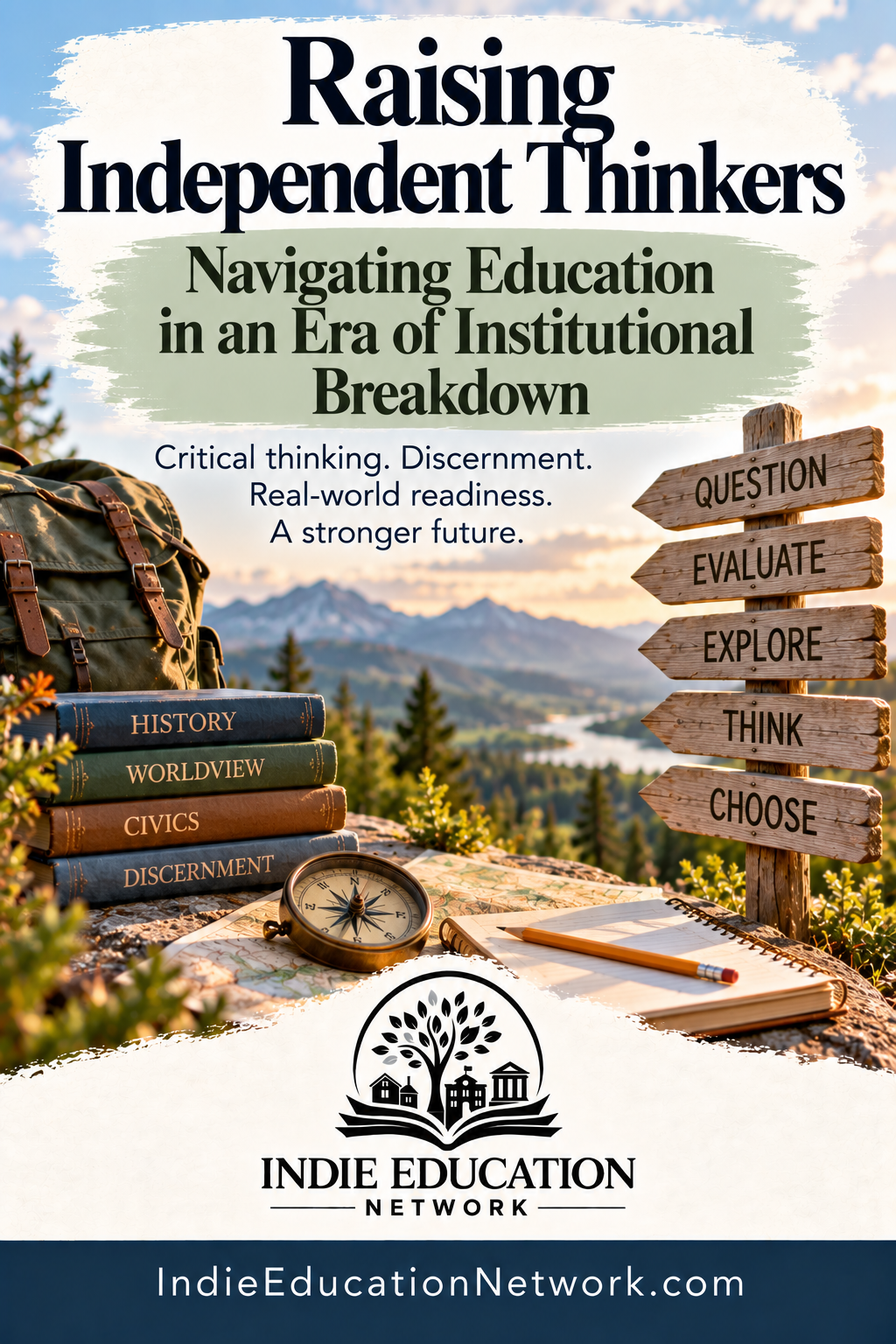
When Systems Falter: The Parent’s Dilemma
The conversation around school choice and alternative education is shifting rapidly. Families today face a unique challenge: many of the institutions they relied on as children, schools, churches, even trusted media, are no longer universally trusted or seen as infallible. As one parent put it, “What do we do when the systems we were raised to trust stop working?”
This sense of uncertainty forces a vital question for parents and education leaders: How can we raise children who are independent, thoughtful, and equipped to navigate a world in which consensus is rare and authority figures are questioned, not just obeyed?
Crumbling Trust: Why Institutions Are Losing Ground
It’s no secret that trust in major institutions is declining. The discussion explored reasons why this is happening, with several points raised, including the proliferation of scandals within religious, governmental, and corporate organizations, all of which are amplified by social and digital media: “People know more now. They know more scandals or they’ve been exposed to… real information or not. But there are many scandals that have been exposed or, you know, communicated. So that’s weakened a lot of these institutions.”
Another key theme that emerged was the influence of money and power. Wealth inequality was cited as a factor in eroding institutional credibility, with questions like, “Does the New York Times actually work for the people or do they work for corporate interests that are paying their ads?” Even schools and churches are not immune; special treatment may be given to big donors, leaving regular families to question whether decision-making is truly impartial.
The overall takeaway: skepticism is now more common than unwavering faith in institutions. For families, this creates both challenges and opportunities.
Beyond Blind Obedience: Teaching Critical Thinking
A key theme that emerged was the call for parents to move beyond a one-size-fits-all model of either total trust or total rejection. Today’s children need to develop “the courage, the principle, the conviction” to make choices aligned with their values, even if those choices diverge from what institutions suggest.
The conversation focused on the importance of raising children to evaluate information for themselves. For example, one parent described how they teach their children to use institutional experts (like doctors) as consultants rather than ultimate authorities: “We prefer to do our own research, trust our own experience and intuition and research, and then go to a doctor… to give us their very informed opinion. But then we use all of that information together to make a decision rather than… ‘[the] doctor is a doctor, and therefore I should listen… regardless.’”
This mindset, treating all authority as input, not commands, is the foundation of self-directed learning, and applies to every area of life: “That same idea of training our kids to become independent thinkers means cultivating the idea that they should think autonomously on a broad number of topics.”
The Courage to Stand Alone
One concept discussed was the difficulty of acting differently from the group, even when you believe you are right. Institutional pressures are powerful. Whether during major crises (like Covid, with its mandates and social pressures) or daily life, kids and parents alike are often nudged to “go along to get along.”
Yet, as the episode highlighted, “If you have a different opinion and you’ve researched it… but you aren’t willing to take a stand, then it doesn’t matter. That’s kind of what Covid proved.” Many people disagreed internally, but still went along because of fear of social or institutional backlash.
A practical example included a parent who chose a holistic remedy over a physician’s prescription: “I said, well, I’m going to. But I understand that if this does not go well, that is 100% on me.” This willingness to own the consequences of one’s decisions is, the discussion noted, a leap that both parents and young people must practice.
Finding Your Tribe: Belonging Beyond Institutions
As institutions lose trust or become less responsive, families are seeking “tribes”, communities that share core values or priorities. This isn’t always straightforward. “People have difficulty finding their tribe… because people have different priorities,” such as faith-based versus health-based communities.
A key insight here is that groups with a clear, positive identity (such as Christian homeschoolers) often flourish because their “value system is very clearly articulated.” In contrast, those seeking to avoid a particular negative (such as bullying or food allergies) find it harder to anchor a group identity or build lasting community.
For families who are “tribe shopping,” it becomes crucial to define your core non-negotiables, and to understand that some degree of compromise, or even loneliness, is sometimes inevitable. “If you are very principled, then you risk not being able to be part of anything… there’s always going to be something you disagree on.”
Using Institutions Wisely: Policies, Handbooks, and Boundaries
The discussion explored practical steps for working with (not just against) institutions. When engaging with a school, church, or doctor, read the policies and handbooks carefully. Use these documents as both a guide and a filter: “If you’re defining your tribe… that’s where you put [your core values]. So that… new people… can read it and say, ‘Oh, we understand that your group is founded on respect and this is what that means.’”
Similarly, when joining an institution, “have a list of… core questions that are really important for you.” If a school, church, or co-op cannot answer your questions satisfactorily, don’t settle for an uneasy fit, keep looking to protect your family’s values and well-being.
Help Kids Name and See Institutional Thinking
Institutional thinking can be surprisingly invisible, especially to those who have only ever known traditional schools, churches, and clubs. Often, parents only become aware of its constraints after feeling frustrated or disempowered. “You have to spend some time identifying what is institutional thinking, which I didn’t really even know what it was until I started having problems.”
Helping children perceive these dynamics gives them language and tools for later in life. As articulated in the discussion: “My children become my little… They get lectured and I point out all the institutional stuff to them… because I want them to see it… and you’re going to see this again in the future.”
Takeaway: Raising Thinkers for a Changing World
In a time when “the world is on fire right now a little bit,” raising independent, resilient thinkers has never been more urgent. Critical thinking, courage, and a willingness to own one’s choices are the lifelong skills that matter most, not just for academic results, but for meaningful citizenship and satisfying relationships.
For families and educational leaders alike, the challenge is clear: focus not on finding perfect institutions, but on helping children develop the tools and values to flourish in, with, and sometimes despite the imperfect systems around them.
“Learning doesn’t just happen in the classroom, it happens everywhere.”
Sarah McCubbin is the founder of Indie Education Network and Indie Education Press and host of the Beyond the Schoolhouse podcast. A mom of nine with nearly two decades of experience navigating homeschool, co-ops, private, public, charter, and other education models, Sarah believes there is no single right way to educate a child.
She writes about homeschooling, independent education, curriculum, education entrepreneurship, and the growing number of ways families and educators are creating learning experiences that fit real kids and real communities.
Through Indie Education Network, Sarah connects families, educators, leaders, and education businesses with the ideas, resources, and people helping shape the future of independent education.
Connect with Sarah:
IndieEducationNetwork.com | Beyond the Schoolhouse Podcast | LinkedIn

Leave a Reply