When an experienced classroom teacher chose to bring her kids home for school, her world shifted in ways she never imagined. In this heartfelt interview, discover why a seasoned educator left traditional schools for family-centered learning, how it changed her views on education, and what today’s families can learn from her story.
The Leap: Why a Teacher Chose Homeschooling Over the Classroom
For many families, the journey into homeschooling begins with a gradual curiosity, a tugging sense that another path might work better for their children. For Christy, a dedicated teacher with years spent shaping minds in both public and private schools, the shift to homeschooling was startlingly abrupt and deeply personal.
“I stood there and watched the TV,” Christy recalls, remembering the evening she and her husband learned that a child had been taken from a nearby private school. “I turned to my husband and I said that we could go ahead and live in a cardboard box, but there was no way I was sending my children to school”.
This moment of fear-based clarity, as she openly names it, rewrote the plan she had carried for her children’s education. She had expected they would attend private school, “because private schools tend to have a little more safety features than public schools”. Yet that safety proved elusive, pushing her to homeschool all three of her kids before they ever entered a classroom.
Schoolteacher to Homeschool Parent: Unlearning and Reimagining
For Christy, the transition didn’t just mean a new location for learning. It upended everything she knew about education. “The structure of school was very deep in my soul,” she admits.
Leaving behind the rhythm of bells and lesson plans was not easy. At first, she tried to replicate the classroom at home, researching the same professional curriculum she’d used with her students. But she quickly hit an unexpected problem. “I saw how much one teacher’s edition and one book for one child cost. And I was like, what on earth is going on? Who can afford to use this? If I’m going to homeschool, I’m going to have to figure this out”.
Letting go of those “teachery things” was both a necessity and a gift. In fact, she never ended up using a formal reading curriculum at all, even as her host, Sarah McCubbin, described her own early insistence that “you will learn to read because you’re five. Right, child, you will learn to read”. This pressure led not to faster learning but to tears, teaching both women that traditional timelines do not always suit individual kids.
The Power of Student Motivation: Why Learning at Home Can Look Different
One of the strongest themes to emerge from Christy’s experience is the transformative power of student motivation. In a classroom of thirty, motivation can be hard to nurture; at home, it’s much easier to notice and respond to.
As Sarah McCubbin notes, “motivation is like putting gas on a fire. You as the teacher can build the fire, but if there’s no motivation or internal desire…”.
For Christy, her own children’s learning was often driven by genuine curiosity. “When there’s a need to apply it, their willingness to learn and put forth the effort just blows up,” she remembers. One of her daughters, once a reluctant reader, transformed overnight when her older sister refused to read Harry Potter out loud for her. Motivation struck, and her daughter devoured the massive novel herself.
This approach, matching learning to readiness and interest, contrasts with the rigid grade benchmarks found in many schools. Christy reflects that school structure, while beneficial for some, “doesn’t work for everyone”. Homeschooling meant her kids could “find and own their learning,” something she counts as “the greatest gift” she’s given them.
What Schools Do Well, and Where They Struggle
Despite the rewards of homeschooling, Christy acknowledges that her years in the classroom weren’t wasted. There are real strengths in the school system. “What schools do well is the schedule. I like life that has boundaries and structure,” she reflects. For some kids, the predictability of the school day truly works.
But she is quick to point out the disconnect between what parents imagine happens in the classroom and what really goes on: “By the time I said, take out your math book and everyone was ready to get instruction for math, 15 minutes could have passed out of a 45 minute block”. Between transitions, interruptions, and the need to move entire groups together, a seven-hour school day is not seven straight hours of focused learning.
She also highlights the burden of homework, noting that many parents do not realize “that their kids are bringing homework home because that’s basically homeschooling after they’ve been at school all day”.
Creating Shared Family Memories and Lifelong Learners
So what is gained in home education that can be hard to find elsewhere? The answer, for Christy, is much deeper than just content mastery.
“Our most precious, precious memories is the things we did together as a family. We would… giggle, like, this is school. Isn’t this cool? There’s no one else here”. With a husband whose job took him away for months at a time, Christy saw homeschooling as a way to reclaim family time, taking their family adventuring together, counting every day as a school day, and weaving practical tasks like car maintenance into the life curriculum.
With these shared experiences came resilience as well. “Teaching them to find and own their learning” meant that her kids graduated into adulthood as problem-solvers. Sarah McCubbin shares her own story: “My oldest son and his wife bought a house…he’s like, I have money to pay a roofer, but actually I want to do it myself. So he’s learning how to roof the house. I’m like, this is what happens when homeschoolers grow up, I can figure it out”.
Breaking Myths: Teachers and Homeschoolers Sharing the Same Table
A surprising result of Christy’s journey is how she bridges the worlds of classroom and co-op, debunking stereotypes. Too often, she says, “teachers default immediately to the extreme of the unschooled, where there’s no structure,” while homeschoolers may see schools as “controlling and manipulative”. The reality, she insists, is far richer and full of crossover.
She encourages hesitant parents: “You’ve actually been homeschooling since your child was born, and you’re just going to continue to guide and love them. It might just look a little bit different than you’re used to, but you’ve already been homeschooling, so there’s no reason you can’t continue”.
Homeschooling in a Changing World
As homeschooling has grown, especially since the pandemic, Christy sees public attitudes shifting. “I love that we’ve gone from, you would hide and not tell anyone you were homeschooling, to it being an open conversation”.
Yet she’s also noticed changes in the homeschool community itself. There’s a spectrum now, from those pursuing rigorous, academic paths to families focusing on only the essentials their children will use as adults. The diversity of approaches, she believes, is here to stay and will continue to shift as families navigate the choices available.
Takeaway: There’s No One Right Way, But Shared Memories Matter Most
For families wrestling with educational decisions, Christy’s story offers reassurance and inspiration. The journey from school to homeschool is not about perfection, but about fitting education to the child and family. It’s about the rhythms, the mistakes, and, above all, the shared experiences that form not just students, but lifelong learners and strong families.
As Christy puts it, “They might swing from the chandeliers a few times, but then they’ll land the job”. The proof, for many homeschool families, is not in a perfect school day, it’s in the grown kids they send into the world, confident they can figure things out and carry their family’s stories with them.
For more of Christy’s educational adventures and creative holiday-based homeschooling resources, visit Happy Hive Homeschooling.
Connect With Christy
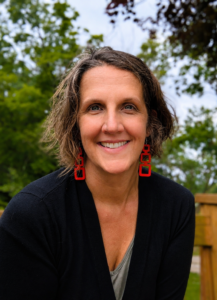
Sarah McCubbin is the founder of Indie Education Network and Indie Education Press and host of the Beyond the Schoolhouse podcast. A mom of nine with nearly two decades of experience navigating homeschool, co-ops, private, public, charter, and other education models, Sarah believes there is no single right way to educate a child.
She writes about homeschooling, independent education, curriculum, education entrepreneurship, and the growing number of ways families and educators are creating learning experiences that fit real kids and real communities.
Through Indie Education Network, Sarah connects families, educators, leaders, and education businesses with the ideas, resources, and people helping shape the future of independent education.
Connect with Sarah:
IndieEducationNetwork.com | Beyond the Schoolhouse Podcast | LinkedIn

Leave a Reply