With educational landscapes shifting fast, many parents and educators wonder how to find the right fit for their children and students. Learning pods are emerging as a flexible option, but what makes them work? Jean Lee’s story of starting and scaling her vibrant pod in Indianapolis sheds light on balancing structure, community, and academic challenge. Here’s what parents, teachers, and education leaders should know.
What is a Learning Pod, Really?
When most people hear about alternatives to traditional schooling, homeschool co-ops and the newer micro schools might come to mind. But learning pods? They occupy a unique middle ground that many families are just beginning to explore.
As Sarah McCubbin puts it, the concept of learning pods gained attention during the pandemic but is still relatively unfamiliar territory for most, even among longtime homeschoolers. Jean Lee, who runs a large and thriving pod in the Indianapolis area, has helped fill that gap by “building educational learning communities from scratch” for over a hundred children, mainly ages 8 to 14.
But what is a learning pod in practice? Jean Lee describes it this way: It’s not a volunteer-based homeschool co-op, nor is it a tuition-based micro school with a rigid private school structure. Instead, “a learning pod falls somewhere in the middle. I host drop-off classes two full days…and it’s skills-based, not based on age,” she shares.
Age, Skill, and Teamwork: The Unique Blend
Traditional education often sorts kids by age, but Jean Lee’s learning pod is skills-based. Students are grouped by their ability and interest, not simply their birth year: “You may have an 8-year-old who is highly skilled and technical and well prepared to do middle school engineering, but they don’t have access to that because they’re young and it’s separated by age group,” she observes.
In Jean Lee’s program, that challenge becomes an opportunity: “I love that I get to incorporate whoever’s ready for that learning. It’s beautiful to see all of these kids together”.
Of course, mixing a wide range of ages and skills has potential pitfalls. As Sarah McCubbin points out, sometimes parents overestimate their children’s readiness to join older or more advanced groups, which can slow everyone down. Jean Lee handles this with clear class requirements and strong expectations: “My classes are all academically focused. They require a high level of independence. They are team-based, so they require teamwork and collaboration and communication skills”.
High Expectations: Teaching to the Top
The learning pod is not like a typical classroom, explains Jean Lee, where lessons often get adjusted for the slowest learners. “I don’t teach to the average or carry along the lowest student in the class. I teach to the highest student in the class…It sets the bar high. It tells everyone this is our goal of learning”.
This method, she says, benefits everyone. Peers help each other through team-based projects, and each child’s unique strengths, whether writing, building, or managing resources, get a chance to shine. “What I have found is that each student has different strengths. Some are great at writing, some are great at project management, some are great at building…That’s representative of the real world”.
Real-World Skills for the Real World
Beyond content knowledge, Jean Lee’s learning pod immerses students in skills they’ll use beyond school. Her inspiration comes from experience: “What do I use in corporate America? What are we using in our everyday lives, in our home life, in our relationships, in our jobs, and try to develop that and make that a realistic perspective within the class”.
Project-based learning plays a big part. Students work together on complex problems, which not only makes learning more effective but also more social: “There are a lot of experiences you can’t have unless you have a huge group of kids,” she notes.
“Nothing about [my large group classes] would work unless they were that big. You can’t do team-based learning unless you have a whole bunch of them,” she says.
The Accidental Start: From One Wish to One Hundred Students
Like many successful ventures, this learning pod began with a simple wish for a richer learning experience for Jean Lee’s own daughter. After arranging a Junior Achievement Biztown simulation, she quickly saw interest explode: “Within two weeks, 40 kids signed up. I had no intention of being a teacher,” she laughs.
But it worked. Parents clamored for more, so she expanded into geography, engineering, literature, and a “Dessert Lab” science class. “[Parents] said, ‘what are you going to teach next?’ I said, well, I have a newborn at home, so I wasn’t really planning on being a teacher. I just did this for my own daughter. And they said, ‘our kids loved you. You have to do something else’”.
Structure, Scale, and Sustainability
As learning pods grow, their structure matters. For Jean Lee, forming an LLC gave her freedom to shape the program’s direction: “I wanted to be able to continue to curate this experience as I needed it to grow”. Unlike nonprofits, which require a board and collective decision-making, running an LLC ensures “full control over the ability to curate the program,” especially valuable for someone who needs flexibility and creativity.
Still, running a pod can be all-consuming. With multiple classes and over a hundred kids, Jean Lee is candid about the challenges: “When you’re dealing with a bunch of people volunteering, that can be very difficult to organize…It’s a huge commitment of time, resources, and you have to be willing to just be boots on the ground, calling, calling”,.
Collaboration and Community
Building sustainable educational alternatives is about more than lessons. In Jean Lee’s case, it relies on relationships, with parents, with other educators, and, critically, with community institutions like the local library. The Westfield Library is not just a host, but a true partner: “[It’s] a reciprocal relationship. It’s not one-sided. I support many things happening there and we work very closely together”.
She extends the sense of community to the families too. When a parent needs flexibility for pickups, or a child needs to tag along, Jean Lee is able and willing to say yes: “That’s the beauty of this space…it is family centric…no one questioned that I was still going to be able to do my job well with my own child in tow”.
Wisdom for Aspiring Pod Leaders
For parents and educators thinking of starting their own pod, Jean Lee offers this practical advice:
- Build around your passions. “Find something that your family is interested in and passionate about. What do you like learning? How do you like learning?…You are more likely to stick with it”.
- Be realistic about your time. Running a pod “is not a small endeavor…Think about your time constraints, and that’ll define where you go”.
- Cultivate community partners. Whether parks, libraries, or local institutions, “just start calling. That is, I think, the crux of where people decide, are we going to be a success and a go or is it too much?”.
- Start small and grow as you need. “You can start before you have any of it figured out. You can literally just put your idea out there and see if anybody else is interested and then build from there”.
Takeaway: The Time for Educational Innovation is Now
“There will never be a right time,” says Jean Lee. The landscape of education is transforming, and parents and educators have the power to shape what comes next. Whether you want to build a pod, join one, or just find alternatives for your family or school, start with what excites you, set clear expectations, and lean into community. As Jean Lee puts it, “But go and do it. Start something”. The future of learning may be closer, and more collaborative, than you think.
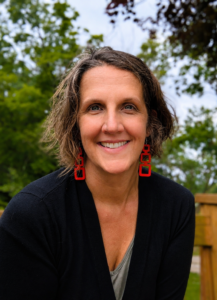
Sarah McCubbin is the founder of Indie Education Network and Indie Education Press and host of the Beyond the Schoolhouse podcast. A mom of nine with nearly two decades of experience navigating homeschool, co-ops, private, public, charter, and other education models, Sarah believes there is no single right way to educate a child.
She writes about homeschooling, independent education, curriculum, education entrepreneurship, and the growing number of ways families and educators are creating learning experiences that fit real kids and real communities.
Through Indie Education Network, Sarah connects families, educators, leaders, and education businesses with the ideas, resources, and people helping shape the future of independent education.
Connect with Sarah:
IndieEducationNetwork.com | Beyond the Schoolhouse Podcast | LinkedIn

Leave a Reply