
What every parent, teacher, and homeschool leader needs to know about building digital literacy early. Practical, story-rich advice from cybersecurity expert Michelle Mosey and veteran educator Sarah McCubbin.
The New Parenting Challenge: Safeguarding Kids in a Connected World
When we think about raising kids, images of teaching them to look both ways before crossing the street or buckling their seatbelt often come to mind. But as Sarah McCubbin points out, “I don’t think a lot of us are really thinking about the fact of, like, we know about, like, stranger danger… but the whole idea of the Internet and keeping them safe, I always, I, I learned it by mistake”.
The stakes are rising rapidly. More of our children’s worlds, friends, learning, entertainment, are happening on supercomputers small enough to fit in their pockets. This raises the essential question: How do we prepare our kids, from kindergarten to college, to be savvy and safe as digital natives?
Michelle Mosey, Australian Navy veteran and head of homeschooling at Hackers Jack, spends her days answering exactly that. “I am incredibly passionate about educating kids around cyber safety and security,” she says, reminding us that building discernment before a crisis is key.
Why Total Digital Isolation Doesn’t Work
Some families avoid the online world, believing it’s best to shield children from all risks. “[A lot of parents say], ‘We don’t let them on the Internet at all.’ And I’m like, that’s, that’s a good approach, but it’s only going to last for so long because our lives now are so intertwined with the digital world in everything that we do” (Michelle Mosey).
Even if you tightly supervise at home, kids will eventually find their way online, at a friend’s house, at school, or by borrowing a sibling’s device. “If they go to their friend’s house who has a computer…eventually, by the time they reach, you know, 14, 15, 16 years old, they’re going to need a device” (Michelle Mosey).
The reality? Prohibiting access isn’t protection. It only delays the inevitable. What works is intentional, ongoing education and open dialogue, right from the beginning.
Start Early: Digital Safety Lessons Can Be as Natural as Stranger Danger
Surprisingly, both experts agree: you should start talking with children about digital safety as early as you introduce them to “stranger danger.” “[How old] were your children when you started talking to them about strangers?” asks Michelle Mosey. “It’s no 3, 4 years old. They know who is in their circle then. I think it’s kind of appropriate to start talking about it then and start talking to them about the platforms they’re on or the games that they’re actually playing”.
At this age, safety isn’t about instilling fear. The goal is to help kids know what’s okay to share, when to seek help, and how to recognize patterns, just like you’d teach them not to give their address to a stranger on the street. “If you feel uncomfortable, just come and get mummy, come and get daddy,” advises Michelle Mosey.
Real-Life Stories: Why Technical Barriers Aren’t Enough
Sarah McCubbin shares from experience as a mom of nine: even the strictest controls aren’t foolproof. Her own 15-year-old, despite a totally “locked down” phone, still received inappropriate messages from bots. “So, like, just putting protection in place wouldn’t be enough because something can always get through”.
The digital landscape is full of clever workarounds. “Kids are smart and they will find a way,” Michelle Mosey openly admits. As Sarah McCubbin jokes, “My oldest is a software developer. When he was younger, we tried blocking software…but he told us, every time you would try to block me, I was like, challenge accepted. How can I get around this?”.
What’s required is establishing trust and building habits of discernment, not just implementing technical fixes.
Facing the Threats: Bullying, Sextortion, and Chatbot “Friends”
Parents hesitate to scare their children, but ignorance is no longer safe. Both Sarah McCubbin and Michelle Mosey emphasize that awareness must grow up with your children.
There’s a new and alarming trend: kids are forming relationships with AI-powered “chatbot friends.” “Ten to eleven year olds are spending up to six hours a day online with chatbot friends instead of actually being outside playing, you know, exercising their bodies and building real relationships with real kids,” notes Michelle Mosey, referencing research from Australia.
And the consequences can be tragic. Michelle Mosey shares, “There was a case here actually just last month…his AI friend actually encouraged him to commit suicide. And he did”. Most chatbots, she notes, “were sexualized…having sexual conversations with kids that normally wouldn’t happen…between, you know, sort of 8 to 10 year olds”.
It’s not about shielding kids from these realities, but preparing them to recognize manipulative patterns and know when, and how, to ask for help.
Building Digital Discernment, Not Fear
The answer isn’t to meet danger with darkness. Instead, programs like Hackers Jack focus on empowerment. “[Our lessons] are two to three minutes long, reinforced with a couple of questions at the end to test the learning,” Michelle Mosey explains. For the youngest kids, “they are actually led on adventures by Captain Cyber Champ and his group of friends…they learn about what is a password, about technology, recognizing patterns, really delving into developing that critical thinking”.
As children mature, lessons cover everything from how to spot misinformation and fake news, to resisting phishing and online manipulation, to understanding the permanence of a digital footprint. “Building a really good digital footprint so you can promote the good work…and not have a prospective employer see something you posted when you were 15,” underscores Michelle Mosey.
Sarah McCubbin sums up why pre-emptive, ongoing conversations matter most: “By the time they’re like, turning 21 or they’re 18, 19, 20, when these things might come up, we’ve had those conversations for years. And so now…there’s no rebellion because this has been something they’ve been sharing thoughts on for years”.
What If Something Goes Wrong?
Perhaps the most vital lesson is this: De-stigmatize mistakes and keep the channels open. Kids, even smart, big, “tough” ones, can fall into online traps.
“It’s actually happened to two of my sons,” Sarah McCubbin reveals. “Thankfully, we have a very open relationship. And…the one time it happened, I had literally been talking to my son, explaining this kind of danger pattern…it happened two weeks later. But…he immediately was like, I need to talk to dad…I need to talk to the police…because we’d had that conversation, obviously we didn’t have Hackers Jack, but we’d had this conversation”.
Removing shame and creating a climate where kids come to you first, no matter what, is the real “parental control” every family needs.
How Schools and Homeschool Families Are Responding
Awareness is catching up to the need. Some US states now require digital safety as part of K-12 curricula, and schools are adopting structured programs. Courses like Hackers Jack offer more than a firewall: “You can get around three children onto the platform for less than $200,” says Michelle Mosey, with 1300+ lessons spanning everything from password basics to deepfakes to reputation management.
For many, the tipping point is seeing the real-world cost of not investing in digital literacy. “When you consider the cost of one mistake and how devastating it is for somebody’s life…it’s so nominal when you consider how expensive it is once you goof up,” warns Sarah McCubbin.
Final Takeaway: From Fear to Confidence
Parents and educators cannot afford to let kids wander online unprepared. The good news? As Michelle Mosey puts it, “It is a flip of the mind about going from the physical to the digital…it’s just one more part. Get out ahead of it where you can. Give them that empowerment, give them that education, give them that confidence that you do in their physical lives. Give it to them in their digital lives as well”.
Start the conversation. Keep it going. Make digital discernment a core subject, right up there with reading and math. Your child’s future, online and off, depends on it.
Connect With Michelle Mosey and HackersJack
- HackersJack Homeschooling
- Use discount code 10minute10 for 10% off
- SchoolMaking.com: resources for starting your own homeschool group or co-op
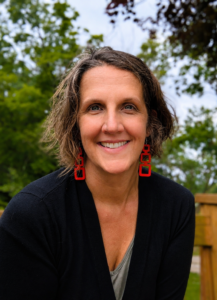
Sarah McCubbin is the founder of Indie Education Network and Indie Education Press and host of the Beyond the Schoolhouse podcast. A mom of nine with nearly two decades of experience navigating homeschool, co-ops, private, public, charter, and other education models, Sarah believes there is no single right way to educate a child.
She writes about homeschooling, independent education, curriculum, education entrepreneurship, and the growing number of ways families and educators are creating learning experiences that fit real kids and real communities.
Through Indie Education Network, Sarah connects families, educators, leaders, and education businesses with the ideas, resources, and people helping shape the future of independent education.
Connect with Sarah:
IndieEducationNetwork.com | Beyond the Schoolhouse Podcast | LinkedIn

Leave a Reply