How a former principal is rewriting the script of education, with kids leading the way and the forest as their classroom.
What If We Designed Learning Around Kids, Not Systems?
Education is undergoing a transformation. For parents and education leaders overwhelmed by a dizzying array of new models and terminology, it can be tough to know what fits best for their children or communities. Self-directed and experiential learning are terms that get tossed around, but what do they look like in practice? And what shifts when educational choices really put kids in the driver’s seat?
In a candid conversation from the “Beyond The Schoolhouse” podcast, Justine Wilson, a seasoned educator turned founder of Curious and Kind in Florida, sits down with Sarah McCubbin to unpack the world of self-directed, nature-based education. Their dialogue offers insights and concrete inspiration for anyone exploring new directions outside the traditional schoolhouse.
Redefining the Target: Why Self-Directed Learning?
After 17 years in classrooms and administrative offices, including time as a principal in both U.S. and international schools, Justine Wilson found herself wrestling with a fundamental tension. Reflecting on her experiences, she shares, “I found myself as a principal saying and doing things that were beneficial to the system rather than the child.” The pivotal moment came during her time managing a large elementary school, where year after year a young student confided, “He didn’t like it here and wanted to go home.” Despite efforts to tinker with the system, nothing fundamentally changed for that child, or countless others.
This realization led Justine Wilson to step away from the institutional rat race and ask what education could look like if it were truly designed for kids. “I really wanted to be able to design something for kids, but I didn’t know what that was,” she recalls.
Where Learning and Living Intersect: The Nature Immersion Approach
So what did she create? Curious and Kind blends two approaches: self-directed education and forest schooling. As Justine Wilson describes, her program is “a self-directed nature immersive program that supports little ones and their parents,” with forest school offerings for homeschoolers and a teen program for older kids. The thread that unites all of these: learning led by curiosity, community, and real experience, mostly outdoors.
But this is not a free-for-all or a retreat from academic substance. Justine Wilson is quick to point out that true self-directed learning is not the “Lord of the Flies” scenario many skeptics imagine. “If you set them in a forest setting, oftentimes with no adult instruction and you’re just watching, what’s going to emerge is a trade economy, skill assessment… they’re going to figure out a way to play and work together. Lord of the Flies is fiction.”
Adults act as facilitators and co-learners, not managers. The result? “We’re intentionally developing relationships with the kids, building that emotional safety,” she says. The day-to-day isn’t about ticking off standardized boxes but about “balancing individual needs within community.”
Project-Based, Child-Led, or Something Else?
With so many new models out there, parents often feel lost in a maze of jargon: project-based, child-led, unschooling, self-directed… what are the meaningful differences?
In Justine Wilson’s experience, project-based learning typically starts with an adult’s agenda. For example, “Let’s say I want you to learn about ancient Egypt. So let’s make a project about ancient Egypt. Do you want to write a poem, make a diorama…?” The kid has voice in the process but the learning objectives are pre-determined.
Self-directed learning, by contrast, begins with what sparks the child’s engagement. “The real difference is that it comes from within the child,” she explains. Maybe after visiting a museum, a student gets inspired to learn more about King Tut, and the adult’s job is to nurture and resource that budding interest. The curriculum unfolds around each learner’s questions.
As Sarah McCubbin puts it, self-directed education is “a lot like the healthy form of unschooling.” The adult is “a facilitator, a provoker,” who “asks questions to further open doors you might know of, but you’re also a learner alongside the kids.”
What Does a Day Actually Look Like?
For many parents, theory is great, but what will my child really do all day, and how do you keep it safe, meaningful, and not just chaos?
At Curious and Kind’s forest school, students (ages 5-12) spend most of the day outdoors, with a mix of child-led free time and “offerings” planned by facilitators. This might mean “catching and identifying insects with our insect nets in the morning” or “bow and arrow making” in the afternoon. Kids suggest activities, sometimes leading their own, from “capture the flag” to cooking projects. Facilitators work to accommodate students’ wishes as much as possible, rotating high-risk activities as safety and adult presence allow.
Key routines structure the day: a morning gathering, offerings, unstructured play, a communal lunch, and an end-of-day reflection, often tied to a “social-emotional word of the week.”
Teens have their own program, including “Mental Health Mondays” for community and connection, academic support days for co-working, and an innovative “Flying Squad”, where groups explore the city by theme (entrepreneurship, government, food) with students taking increasing responsibility for planning the outings.
Social-Emotional Growth at the Center
Again and again, Justine Wilson returns to the importance of social-emotional learning. “I can guarantee that they’re going to learn how to balance their individual needs within community. They’re going to grow social-emotionally because they’re going to be in a multi-age setting.”
These skills are formally nurtured and, as the team realized, must also be intentionally documented, right alongside the more visible achievements like engineering and ecology projects. “Next year we’re going to start just a little text entry [in our app]… so we can start documenting more of that social-emotional learning intentionally,” she notes. Reflecting on negotiation, empathy, communication, and problem solving, Sarah McCubbin points out, “There was a lot of social dynamics where people were trying to include each other but also have some of their personal space and just trying to sort it out.”
Consensus decision making, rather than voting, is practiced daily to promote a sense of belonging. As Justine Wilson says, “Let’s just take an extra moment… [to] balance ourselves within the community. So we are really modeling that and showing the way that the world can work.”
Technology: Tool or Distraction?
Not all self-directed programs look the same. Curious and Kind takes a “very low tech” approach; Chromebooks are available for writing or research, but the emphasis is on nature and face-to-face connection. For older students elsewhere, gaming or AI-driven learning can be self-directed too. Justine Wilson acknowledges: “There’s so much learning that’s happening [with gaming]. How many times do people, when they’re playing, fail, and get right back to it?”
Yet the deliberate choice at Curious and Kind is to provide a refuge from screens, “so we could really focus on our in-person relationships.” Clear communication about such program values, she urges, is crucial for families seeking the right fit: “Ask all the questions, make a choice that fits with your family’s values.”
When Life Challenges Disrupt the Plan
What about teens who are struggling, academically or emotionally? Justine Wilson makes space for this reality. “Some people are, they can prioritize academics and everything’s going according to plan. And sometimes you just get a snag… to be able to find a supportive community that your child does belong, it can, one family has said like, we’ve saved our daughter’s life.”
As rates of teenage mental health challenges and even suicide spike nationally, the program’s “nonjudgmental space” and focus on belonging become life-changing, even life-saving. “If they need to swing in a hammock to regulate themselves, that has value,” Justine Wilson remarks.
Empowering Parents and Kids: How to Get Started
For families curious about adding more self-direction to their children’s education, Justine Wilson recommends beginning with intentional listening. “Goal setting with your child… seeing the potential in their interests,” whether that’s fashion design, ecology, or creative writing. She suggests documenting their learning (using tools like the Prism app), so you can “unpack” the academic richness inside their passions: math through design, language arts through research, entrepreneurship through projects.
And crucially, recognize that parents do not need to bear the full weight of facilitation alone. Trusted programs and mentors can share the journey. As Sarah McCubbin reflects, “That’s the part of self-directed learning that feels like taking the pressure off for me, I don’t have to be the one that does all the things myself.”
The Takeaway: Learning That Lasts a Lifetime
As education options multiply, the most powerful transformations may happen when we peel away the layers of bureaucracy and rediscover what kids can do when trusted, supported, and given room to explore. Justine Wilson reminds us that learning based on curiosity, relationship, and real-world connection isn’t just possible, it’s thriving in places where kids are seen and heard.
You don’t have to live in Florida or start a nature-based school to benefit. Start by listening, stay curious, and let your child’s questions set the path for learning that lasts a lifetime.
Connect With Justine and Curious and Kind
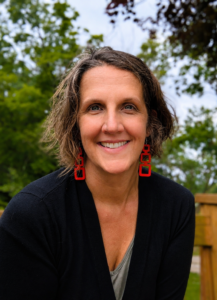
Sarah McCubbin is the founder of Indie Education Network and Indie Education Press and host of the Beyond the Schoolhouse podcast. A mom of nine with nearly two decades of experience navigating homeschool, co-ops, private, public, charter, and other education models, Sarah believes there is no single right way to educate a child.
She writes about homeschooling, independent education, curriculum, education entrepreneurship, and the growing number of ways families and educators are creating learning experiences that fit real kids and real communities.
Through Indie Education Network, Sarah connects families, educators, leaders, and education businesses with the ideas, resources, and people helping shape the future of independent education.
Connect with Sarah:
IndieEducationNetwork.com | Beyond the Schoolhouse Podcast | LinkedIn

Leave a Reply