How purposeful career exploration, with AI-powered insight and real-life perspective, can transform the way families and schools prepare young people for life after graduation.
Introduction: Beyond Falling Into a Job
For generations, students have finished high school or college only to “fall into” whatever job presented itself. It’s such a common refrain that we hardly question it, until, as parents and educators, we watch our own children flounder. “I have nine kids and I have been launching them on repeat, one after another. And this is a topic that’s near and dear to my heart,” shared one mother and educator in conversation with Corey Kossack, founder of Orchard.
But does “falling into it” have to be the default? Kossack’s conviction is clear: “My mission behind this thing is to end the cycle of students falling into a job after high school or college”.
Orchard, his AI career readiness platform, is sparking new conversations, in homes, homeschools, and schools themselves, about what it really means to be ready for the world of work.
The Career Readiness Gap: Why Intention Matters
Ask adults how they arrived at their current careers, and you’ll find a split: some got lucky, but many wish they’d done things differently, armed with knowledge, guidance, or just a little more self-awareness. “People find themselves stuck on the wrong path for themselves. And it’s very difficult to unwind,” Kossack explained, recalling years spent helping adults wrestle free from decisions made too young and with too little information.
The gap is as much about self-understanding as opportunity: “So much of the assessment space and interest inventory… they’re deterministic, right? ‘Here are [the careers] that are for you.’” But real people have layered interests and needs, with fulfillment rarely as simple as a single test result. “It’s not intended to be deterministic. It’s intended to spark curiosity and get you discovering the world of work,” Kossack said.
Modern Tools for Modern Challenges: Orchard’s Approach
When students or parents first log into Orchard, they meet Orchie, the AI-powered career counselor designed to guide rather than direct. Unlike old-school inventories that ask about preferences for “medicine or writing,” the platform’s initial self-assessment probes for qualities like curiosity, focus, execution, and self-reflection, eight core dimensions that make up Orchard’s Career Readiness Index.
“It kind of touched on your curiosity or how you handle yourself in different situations or different types of environments, but it wasn’t focused on a career. I didn’t come out of that and go, ‘Oh, I should have been a nurse,’” recalled one user. Self-knowledge comes first; career matches come later.
Once the baseline is set, students are encouraged to explore broadly. They can chat with Orchie about interests, browse data on hundreds of careers, and, perhaps most valuably, watch “day in the life” interviews with professionals. These videos go beyond salary and education requirements, delving into what the work actually feels like.
“We really film people, real professionals… It’s also, what is it like to be you, right? What is it like to live your life in this role?” Kossack described.
A parent who tried Orchard noticed how it catalyzed interest: “I was in there today and saw one on project management… I don’t even know what someone does in project management, so I was watching those videos. It was very useful”.
The Importance of Open-Ended Exploration
Intentional exposure is critical. Many students, even those who believe they have a specific goal, fall into “tunnel vision” regarding their future. “Uncle John said I should be an electrician because I’m really good with my hands. And like, I’m really curious about how things work and function… And so, like, I’m good. This is it, right?” Kossack said, cautioning that experience and skill do not always align with expectation.
Kossack shared his own story: “I graduated high school believing that I was going to do computer animation and make Pixar movies… I was able to get into this computer animation class [in college] and actually do the stuff… I am terrible at this. I don’t have the spatial stuff that I need”. Early, reality-based experiences can save years of costly misdirection.
Orchard’s approach, then, is to facilitate wide-ranging exploration, and to encourage revisiting and revising plans as self-awareness grows. The program exposes users to the spectrum of possibilities, often revealing roles they never knew existed. In one memorable case, a student fascinated by the brain wanted to help people but didn’t want to be a doctor or nurse. Through guided questioning, Orchard surfaced occupational therapy, a career combining her interests in neuroscience and patient support.
Parents: Nervous Guides and Surprising Power Users
Many parents hesitate to steer from experience. “A lot of people feel like they didn’t get it quite right for themselves. And sometimes we’re hesitant to teach from our failure,” the host observed. “But a lot of times we are not being completely honest because who wants to admit that they’ve like invested their life in something they don’t really love?”.
Kossack recognizes a paradox: “Kids typically won’t listen to their parents… you want to guide them, but you’re like, where’s my role in this?”. The power, he suggests, comes not from dictating careers, but from engaging with curiosity and humility, allowing children to arrive at their own conclusions, supported by real information.
Interestingly, parents themselves often become enthusiastic users of the platform. Kossack predicted, “The power users may end up being the parents… even independent of their own stuff, curiosity for their own kids”. Many discover new pathways for career pivots or late-in-life upskilling, too.
From One-and-Done to Ongoing Growth
Unlike the “trip to the career office” of decades past, career readiness today is a process, not an event. Orchard’s Career Readiness Index isn’t a static score from a single test. “It actually grows with them as they’re doing more exploration, more planning, they’re adjusting their plan… they’re getting experience,” Kossack noted.
This journey can begin with a single 10-minute session or unfold over years. Each new experience, question, or insight is tracked and built upon, a tool not just for students, but parents, guidance counselors, and even broader family support networks.
Kossack encouraged a shift in mindset: “Every person should have purpose and direction in their life… just because a student has a particular interest or has said like, ‘I’m going to do something in business,’ it’s not to poke fun at anybody, but you know, like, business is very broad. Every student, every human being really needs this stuff”.
Bringing Purpose to School and Home
When used in schools, Orchard is flexible: teachers might ask students to research three surprising careers, watch short-form interviews, then discuss together as a class. These conversations reveal not just what students want to do, but why, and foster deeper engagement in academic subjects by connecting them to real-world outcomes.
At home, parents can make it a weekly ritual, exploring options alongside their teens, asking questions, and surfacing values and priorities. “You give kids a goal… you see what happens. It is so different than just, ‘Hey, you need to do this stuff because grades are important,’” observed the host.
Takeaway: From Transaction to Transformation
When it comes to life after school, “falling into it” is no longer enough. Real career readiness is not about predicting the “right” choice, but about learning how to make informed decisions, explore widely, and adjust course with confidence. The right tools combine AI guidance, honest self-reflection, and true-to-life stories, helping families and educators replace old uncertainty with purposeful, resilient pathways.
The future isn’t about giving answers. It’s about asking better questions, and creating space for our children (and ourselves) to grow into the answers we need.
Explore what’s possible. Lean into curiosity. And turn career conversations from a dreaded task into a lifelong adventure.
Connect With Corey and Orchard
- Orchard.careers: start a free trial and help your teen look at their future career differently
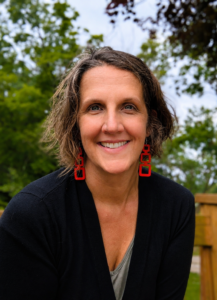
Sarah McCubbin is the founder of Indie Education Network and Indie Education Press and host of the Beyond the Schoolhouse podcast. A mom of nine with nearly two decades of experience navigating homeschool, co-ops, private, public, charter, and other education models, Sarah believes there is no single right way to educate a child.
She writes about homeschooling, independent education, curriculum, education entrepreneurship, and the growing number of ways families and educators are creating learning experiences that fit real kids and real communities.
Through Indie Education Network, Sarah connects families, educators, leaders, and education businesses with the ideas, resources, and people helping shape the future of independent education.
Connect with Sarah:
IndieEducationNetwork.com | Beyond the Schoolhouse Podcast | LinkedIn

Leave a Reply