What if the most overlooked subject in your child’s curriculum could be their secret learning superpower? Discover how music education can transform confidence, brain development, and family rhythms, no matter your musical background.
Why Music Isn’t “Just an Extra”
For most homeschooling parents, the educational journey starts with a flurry of decisions about math, language arts, science, and history. As Sarah McCubbin admits, “As homeschool parents, we often start by choosing math, language arts, science and history curriculum for our kids. And then if we have any time or energy left, maybe we add music.”
But what if this order is all wrong? Throughout their compelling conversation, Sarah McCubbin and music educator Linda McCarty uncover why music should be a core pillar of your homeschool, even if you don’t consider yourself a “musicy person.”
Music, Linda McCarty argues, is not just a nice-to-have: “It strengthens the brain, builds confidence, and equips kids to learn more independently.” Her decades of experience have shown her that music training builds skills and mindsets that affect every other subject.
The Science: How Music Builds the Brain
If you grew up in a school where music was the first subject cut when budgets shrank, you’re not alone. Linda McCarty says: “Even in the schools, music is or the arts is the first to be cut and the last to be brought in.”
But science tells a different story. Citing research pulled from a PBS Kids article, Linda McCarty shares studies that found:
- Music instruction physically develops the left part of your brain that’s involved with processing language
- Just 15 months of music training “gave them improved sound discrimination and helped their fine motor tasks”
- Students in strong music programs “improved 22% in English scores and 20% in math scores”
The takeaway? “Music isn’t just learning the notes,” Sarah McCubbin points out, “It was definitely doing something for their brains.”
Building Confidence and Independence
For many parents, one of the biggest unexpected gifts of music education is how it builds a child’s confidence and independence. As Sarah McCubbin shares about her seven-year-old daughter’s experience, the benefits have surprised her: “It’s the confidence that you see starting to be built around learning, which I find is very transferable. When kids feel confident that they can learn without a parent… it might transfer over to, oh, well, if I can learn music without my mom being right next to me, then maybe I can learn math without somebody holding my hand all the time.”
In families with multiple children, fostering this independence is invaluable. As Sarah McCubbin jokes, “It’s probably my top priority as a homeschool parent because I have nine kids. So, I needed them to be independent.”
When children “have a taste of confidence, it really goes a long way,” Linda McCarty agrees.
Music as a Memory and Learning Tool
If you’ve ever used rhymes or melodies to help your child remember things, you’re already tapping into one of music’s oldest superpowers. Sarah McCubbin recalls: “They would do all the history facts and they would set them to music… if you had math facts, you’d set it to music and you set it to a popular tune or sometimes spelling words.”
Why does this work so well? Linda McCarty explains, “The brain activity that… music just fires all these. And this way they’re using it as a memory tool.” She remembers classic examples like “50 Nifty United States,” pointing out, “If you ever learn that song all the way through, you’re going to remember it 50 years later.”
But the benefits go deeper. By incorporating lyrics as visuals and cues, Linda McCarty witnessed students with reading challenges light up and participate with their classmates at a higher level. As she recalls, one special student jumped up and “starts pointing to the lyrics as the whole class was singing them.” This attention to visual timing and accessibility “set kids up for success who might be struggling in a different area.”
Overcoming Parental Hesitation: “But I’m Not Musical!”
For many homeschoolers, music is daunting because it’s outside their expertise. Linda McCarty relates, “If you aren’t reading music… how do you teach it?” Even with her own formal education, she says, “There were probably 15 years that I would end the year and go, you know what? I still feel like I need to teach them better, more efficiently.”
The solution isn’t perfection. Instead, it’s about having the right sequence and support. According to Sarah McCubbin, “We don’t even realize there is a sequence [to music]. Like, maybe some people do realize or you might know part of the sequence… but as far as the whole progression, most of us are very ignorant about that.”
Programs like Linda McCarty’s Music Duo Academy are intentionally designed so parents “don’t have to have a background in music because I’ve used all my experience and put it in there.”
Key features that make it work for parents include:
- All lessons are pre-recorded and flexible to your schedule
- You can “do it once a week, twice a week… you do it on your schedule”
- No need for private lessons at first, children get foundational skills that accelerate any later instrument learning
Starting and Sequencing: When (and How) to Begin
So, when is the right time to add music education? Linda McCarty says the earliest experiences matter: “Honestly, I would hope a mom is singing to her baby… but definitely you can play those nursery rhymes and stuff and even speak nursery rhymes.”
For her curriculum, kindergarten is a great entry point, although engaged four-year-olds may also benefit. There are “catch-up” courses for older beginners, so “there’s no too early and no too late.”
Sarah McCubbin sums up the “when” perfectly: “It’s at the moment when you realize that it’s something that’s missing or something you want to add. That’s the time.”
What About Private Lessons?
For many, private lessons are the default idea, but Linda McCarty sees a different path for beginners. Her curriculum makes sure kids aren’t “just randomly hitting any notes” but instead are laying foundational concepts, so when they start piano or another instrument, they progress much faster with skills already in place.
As Sarah McCubbin reflects on her own experience, “I remember when my oldest son was taking piano lessons, we did not last very long because I could not handle how slow the progression was.” The video-based course “replaces the beginning of piano lessons” and lets families test drive music learning before committing to travel and expense.
Let’s Rethink “Optional” Subjects
Throughout their conversation, Sarah McCubbin and Linda McCarty return to one theme: as parents, we set the menu for our children’s education. Linda McCarty affirms, “You have got to come in at it with like, okay, they may not choose this, but I know it’s going to benefit them.”
Too often, music is left as a child’s elective (“If you’ve got art, music, and maybe Legos, I mean, I know a lot of kids that would go, I want to go play with Legos”). Yet music brings benefits and “turbo boost” capacities that children can’t anticipate. As Sarah McCubbin puts it, “We don’t actually let them have the choice with, like, math… But somehow it doesn’t really get past math, language arts, science, history… there’s a whole bunch that kind of are optional. We let the kids pick, and so they might not get any exposure or very, very little.”
The Takeaway: A Gift Beyond Notes
Music is not just enrichment, it’s brain training, confidence-building, joy-making, and connection. It’s a hidden power that can reshape how your child learns for a lifetime.
As Linda McCarty says passionately, “I want your child to get a complete music education. And if this is the way that works best for them, it’s a win.”
If you’ve ever felt that music is out of reach, or just one more thing on your plate, take heart: the resources and flexible approaches are there, even for non-musical families. When music moves to the center of your homeschool, you may find your child discovering gifts, and strengths, you never expected.
Connect With Music Duo Academy
- MusicDuoAcademy.com: learn more and get your free singalong
- SchoolMaking.com: homeschooling support and tools
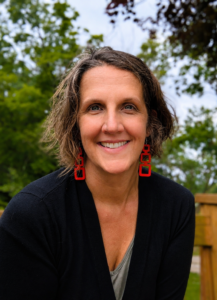
Sarah McCubbin is the founder of Indie Education Network and Indie Education Press and host of the Beyond the Schoolhouse podcast. A mom of nine with nearly two decades of experience navigating homeschool, co-ops, private, public, charter, and other education models, Sarah believes there is no single right way to educate a child.
She writes about homeschooling, independent education, curriculum, education entrepreneurship, and the growing number of ways families and educators are creating learning experiences that fit real kids and real communities.
Through Indie Education Network, Sarah connects families, educators, leaders, and education businesses with the ideas, resources, and people helping shape the future of independent education.
Connect with Sarah:
IndieEducationNetwork.com | Beyond the Schoolhouse Podcast | LinkedIn

Leave a Reply