
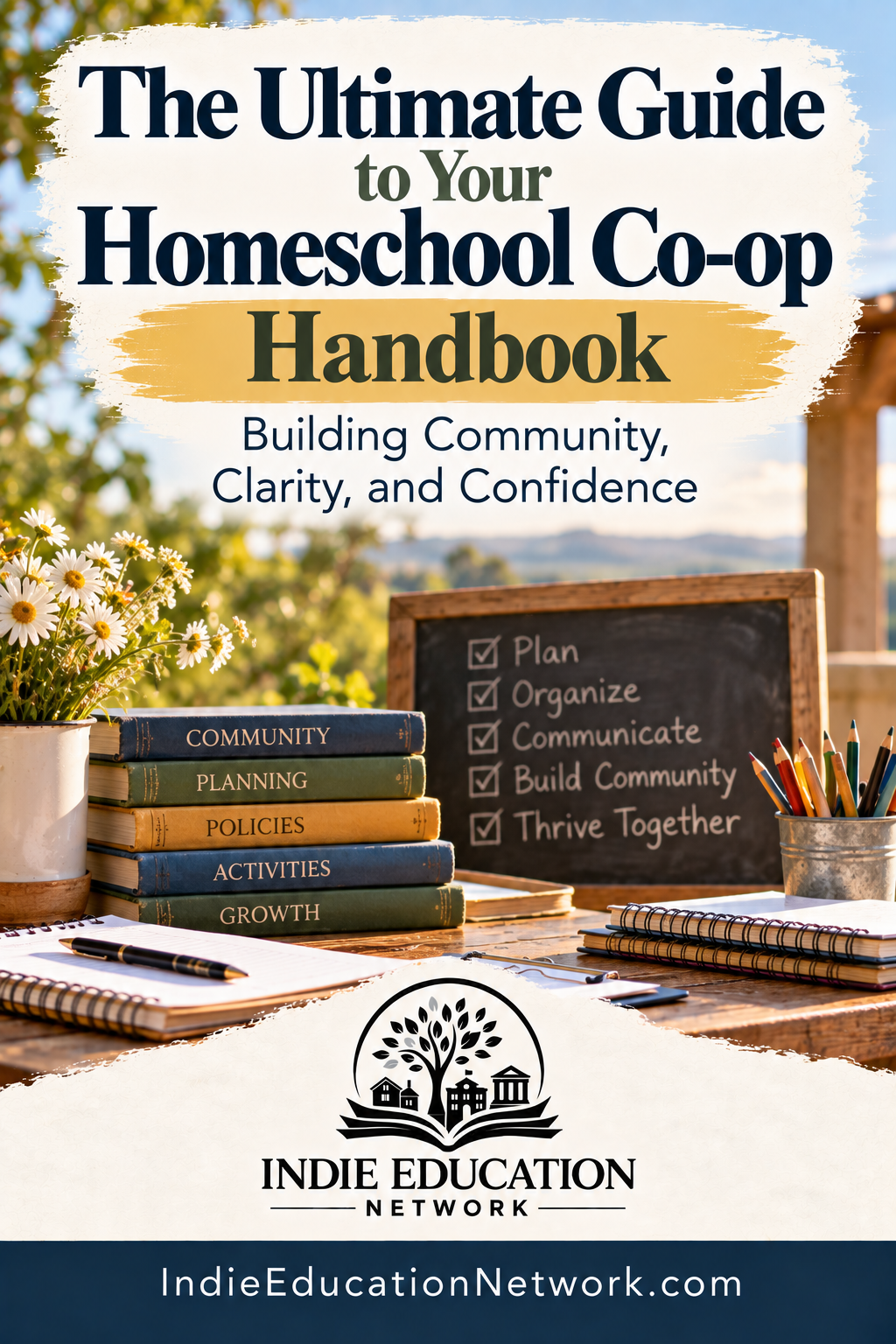
If you’re considering launching a homeschool co-op or have already started gathering your like-minded tribe, the humble handbook is your secret weapon for harmony and growth. Learn from real-world leaders and discover how to get started, what to include, and why “starting small” is your best first step.
Why a Handbook Matters: Protecting Community and Reducing Friction
If you’re a parent, educator, or community leader weighing the leap into homeschool co-ops, you’re likely dreaming of authentic, collaborative learning communities. Yet most successful co-ops didn’t start with grand blueprints; they started with small gatherings and simple playgroups. According to Sarah McCubbin, a veteran homeschool leader and podcast host, the homeschool co-op handbook is “the tool that sets expectations, reduces friction, and protects relationships”.
A well-crafted handbook isn’t bureaucracy for its own sake. It’s an act of kindness for your future self. When everyone agrees on clear guidelines from the outset, small misunderstandings don’t become big resentments. As Sarah McCubbin puts it, “The handbook becomes kind of the bad guy,” making it easier for leaders and members to navigate tough conversations without personal tension.
But you don’t need to start big, or perfect. You just need to start.
From Playgroup Dreams to Formal Structure: Start Small, Learn Fast
Many parents imagine they must replicate a school or formal organization right away to launch a co-op. The truth is: Don’t.
“Start small, right?” advises Sarah McCubbin. “You can start something that just meets in your house. How many people can you have over to your house? A lot of co-ops start as a small playgroup of like five families”. Host a gathering at a park. Invite families via a Facebook group. No organizational policies or handbooks are required at this stage.
What matters most in the beginning is getting your “reps.” Let repetition reveal who is genuinely interested and what pain points naturally emerge. “You want to build a group of people that are also interested in starting a co-op. It’s impossible to start one on your own,” Sarah McCubbin notes.
If you’re already in a group, embrace the opportunity to learn firsthand. Observe attendance habits, financial logistics, and the group’s social dynamics. If you find yourself wrangling no-shows or funding shortfalls in a casual setting, those are clues for future policies. “[You] need to have policies about attendance,” she explains. “Maybe we charged a little bit of money, but it wasn’t enough money to cover all our costs. So we need to have better financial policies or whatever”.
The Anatomy of an Effective Co-Op Handbook
As your group evolves and especially once money or rented space is involved, formalization becomes necessary. Now, the handbook moves from “nice-to-have” to essential. But what belongs inside?
1. Mission, Vision, and Values
Clarity here saves headaches later. A group with an academic focus, for example, needs that stated up front. Says Sarah McCubbin: “The goal was for families to access academic classes for their kids. So a family that came along that just wanted fun classes could quickly see at the front of the handbook that this would not be a good fit for their family”.
If faith is central, name it clearly. “If your organization has a religious mission, that should be in the front of your handbook, it should also be on your website,” she adds. Transparency up front ensures families choose communities that truly match their values.
2. Nuts and Bolts: Schedule, Costs, Procedures
Potential members want basic logistical info. This means meeting frequency, class schedules, registration procedures, and financial expectations should be explicit. “You want to include things like your registration procedure, like how do people join your group? Like what’s the process? Do they need to email someone? Do they need to click a registration button?…You want to put that in your handbook,” Sarah McCubbin says.
3. Policies and Problem Solving
Dress codes, attendance, conflict resolution, and other day-to-day policies matter as your group grows. When issues arise, the leader can refer back to the document: “If there’s a problem in the group and somebody says, ‘I have a problem with Mary,’ I can say, well, in our handbook it says you need to talk to Mary first about your problem and see if you and Mary can work it out…If you and Mary can’t, then come talk to me as a board member”.
4. Public Availability and Redundant Communication
Publishing the handbook publicly reduces time spent on vetting. “You can always strip out information that’s, you know, personal phone numbers…but that way people that are interested can actually peruse it and see if there’s anything that would make it not a good fit for their family” Sarah McCubbin,.
For truly important details, Sarah McCubbin shares a tip from her own experience: say it in three places. Put it in the handbook, on your website, and wherever families gather online or in person.
Building Together: Don’t Go It Alone
There’s a myth that the group organizer must do it all. In reality, collaboration is baked into the strongest co-ops. Sarah McCubbin notes, “You shouldn’t do it alone. Actually, nonprofits, you can’t do them alone. You have to have a board. And a board, depending on the state, is usually three people.”
Start with the families most invested. Once your core group aligns around shared purpose and logistics, you hold a collective voice. “They’ve all agreed that this is the co-op, that they want to be like this. So when they go out and talk to people, they can say, ‘Our co-op meets every other week for the whole school year…’ They’re all going to say the same thing because they have the handbook that says that”.
How Detailed? Growing Your Handbook Over Time
When it comes to length, don’t panic. The first version of your handbook might be just 15 pages. As Sarah McCubbin explains, “Our handbook is around 40. But a lot of that happens over time as you realize that there are problems that you need to address”.
The handbook isn’t static, it evolves. “Throughout the year, there would be issues that came up. If it was a glaring issue, like, we need to change this right now, then we would take a vote to update the handbook and let people know that it had been updated. That was very rare”. Most updates happen before the next cycle of registration, giving families time to adjust and decide if your group still fits their needs.
Group governance can remain simple in the beginning. But, once co-ops handle funds or rent space, nonprofit status and a board become the norm. Boards vote on policy tweaks, budgets, and major decisions, reducing confusion and spreading leadership among founding families.
Starting Feels Overwhelming? You’re Not Alone
For many mothers and primary caregivers, even thinking about handbooks, registration systems, or boards can feel daunting. “[It] almost seems like they have to do all this like corporate bureaucratic work,” Simit Patel observes.
The relief, Sarah McCubbin reminds us, is that much of this comes later and is shared: “To get started, you don’t have to do any of that. You can just invite people to participate in something at a park, at your home, at some public space, and don’t charge any money and just invite people to come”.
The secret is “step by step as you get ready…you get your reps,” Simit Patel jokes. Build slowly, together, and add structure as needs arise.
Takeaway: Your Co-Op’s Success Starts With Clarity, Not Complexity
If you’re ready to create a learning community that fits your family, start with what you have: a handful of committed families and a shared vision. Let your handbook reflect your values, structure, and lessons learned, but don’t let the process overwhelm you. As Sarah McCubbin shares, “You don’t have to have it all figured out when you first start. You will start small and add to it over time, and some of this becomes more clear as you go down this path”.
Your next step could be as simple as inviting a few families to a park. The handbook, structure, and community will grow with you. The most important thing is to start.
Connect With SchoolMaking
- SchoolMaking.com: templates, blog posts, and resources for starting your own homeschool co-op

Sarah McCubbin is the founder of Indie Education Network and Indie Education Press and host of the Beyond the Schoolhouse podcast. A mom of nine with nearly two decades of experience navigating homeschool, co-ops, private, public, charter, and other education models, Sarah believes there is no single right way to educate a child.
She writes about homeschooling, independent education, curriculum, education entrepreneurship, and the growing number of ways families and educators are creating learning experiences that fit real kids and real communities.
Through Indie Education Network, Sarah connects families, educators, leaders, and education businesses with the ideas, resources, and people helping shape the future of independent education.
Connect with Sarah:
IndieEducationNetwork.com | Beyond the Schoolhouse Podcast | LinkedIn

Leave a Reply