
Discover how one Ohio homestead’s two-day-a-week “farm school” is reimagining what school can be, blending hands-on work, heritage skills, historical spaces, and multi-age groups for deeper, joyful learning.
An Alternative Classroom Rooted in Real Work
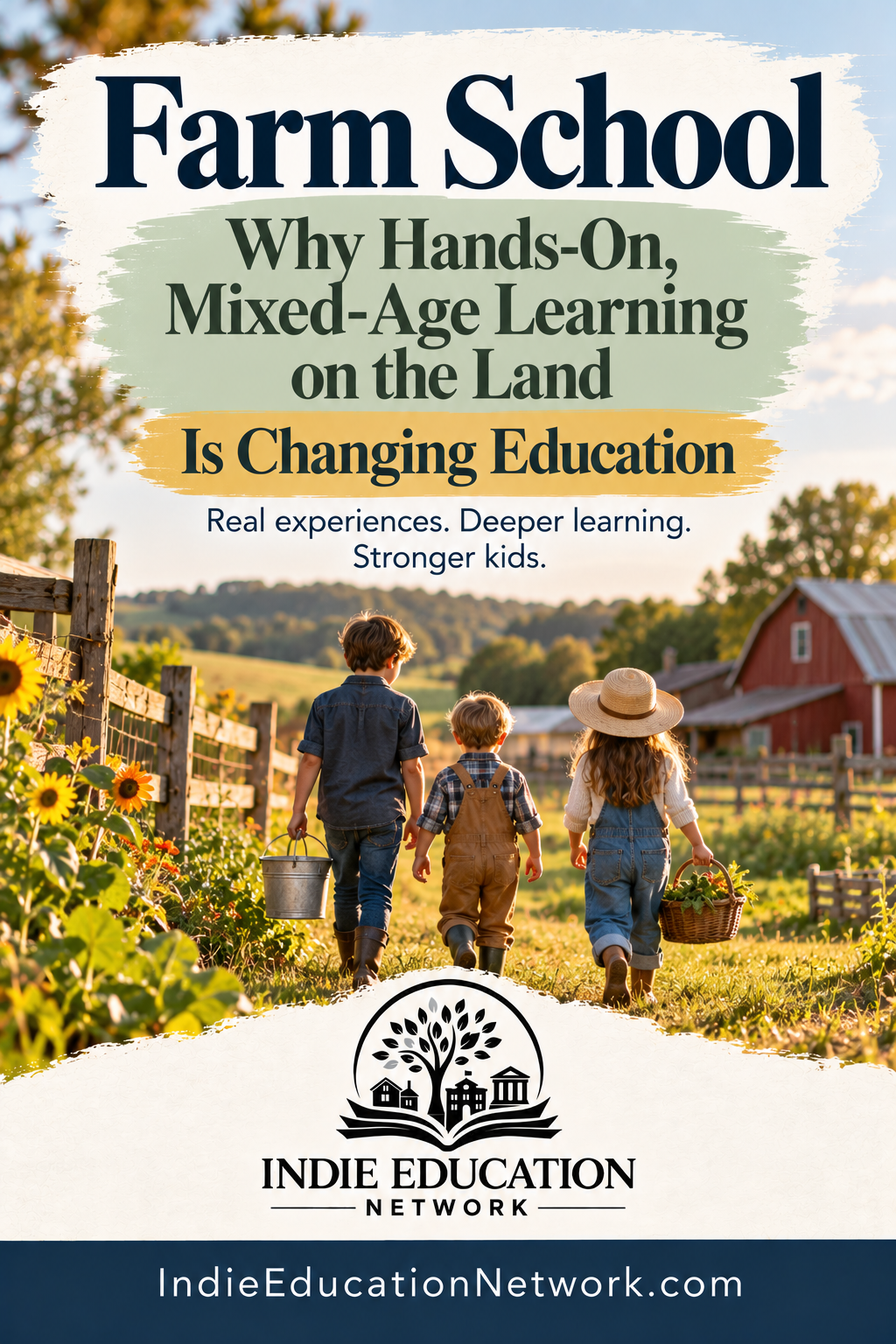
What if your child’s school week unfolded among gardens, heritage livestock, and a patchwork of historic buildings, from a one-room schoolhouse to a genuine 1860s post office? That’s reality for the families who attend Laura’s unique “farm school” in Richfield, Ohio. On her multi-generational working farm, children come together two days a week, not just to learn about history and nature, but to live them.
As Laura puts it, “We’re saving history, we’re teaching sustainability. We live here, too, so we do homeschooling here. It’s a very busy, very fun place”.
This is a story of not just one farm school, but a bold movement reshaping education outside traditional walls, responding to the longing many parents feel for connection, meaning, and joyful curiosity in their children’s learning.
The Family Behind the Vision
Laura and her family have explored nearly every educational path. “My oldest has been to a private school. Three of my kids have tried a public school. We’ve done a bunch of homeschool co-ops…and then of course the farm school is a drop off program for homeschoolers, predominantly homeschoolers, but in the summer, of course it’s open to any kids that want to come. So we’ve kind of done all the models”.
For Laura, the motivation to start her program was simple: “Five days a week is so long to send your kids anywhere. I had my kids because I want to have my kids with me all day…two days a week is perfect for us. It seems like it’s working for the families”.
Over the past five years, the program has grown, attracting between 25 and 40 students in a typical session. Yet Laura remains committed to keeping groups small enough, eight or nine per teacher, “so you can have those relationships…even the best teacher would never be able to really handle 26 kids in an hour and know their learning styles”.
History That’s Alive
Farm school at Laura’s homestead is not just about outdoor play. The property itself is woven with stories. “All the buildings that you mentioned…we have about 40 historic buildings here that my husband’s moved from five neighboring counties and that part’s a non-profit. He restores them pretty much like they were…we have a blacksmith shop, we have a schoolhouse that was originally in Abbeville, sometimes he repurposes them to hold other displays”.
Children learn by doing, surrounded by the material richness of the past: “Photographers come, we’ve had a few low-budget movies shot here. Some of the shops we use functionally, like I have a basket shop and I make baskets, Jim has a woodworking shop…and so, yeah, it’s all that stuff”.
This immersion in tangible history is inspiration for the way Laura’s farm school blends age groups, mimicking the family structure and old-fashioned schooling. “The model of having that one room schoolhouse, where you have, say, 5-year-olds up to the 14-year-olds, that works because then the little kids can look up to the big kids and the big kids can learn compassion instead of just being cool with their friends”.
Learning with Meaning: Why the Farm Matters
Much of what sets this farm school apart is the heartbeat of hands-on, practical work that is both “real and necessary.” Here, learning is not abstract. Mathematics is witnessed in the patterns of leaves; science in the cycle of garden to compost heap to chicken. “In a public school, there’s a lot of facts and a lot of good stuff, but you’re kind of lacking that main connection, where does it take you? What’s the point?”.
Instead of “giving you a worksheet that shows a beautiful circle with a bunny and a plant…if you’re just in the garden and by the chickens, you figure it out. And…that is the highest form of learning. When you’re engaged and you’re excited and you’re interested, you’re going to suck it up like a sponge”.
The Power, and Challenge, of Play and Work
In farm school, play is not just a frivolous extra. “Play is the highest form of learning…being a child is just practicing for being an adult. It’s all about how do you move this body, you don’t know how to work your hands yet, so you’re learning…patterning on the people around you”.
Children have real chores, collecting eggs, working in the garden, learning to pit cherries with metal straws when there’s no proper tool: “There’s a lot of resourcefulness happening. Our forefathers didn’t always have the ideal tool. They either had to make it or they had to…get by with what they had”. As Laura describes, “Teaching the importance of not only working with your hands, but just a slower way of life where it’s okay if something takes a little while, and that just means it’s something meaningful”.
This approach is not about making childhood (or teaching) easy. Children sometimes resist garden chores or are afraid of the chickens. Good teaching, Laura says, is about discernment: “You can look at a kid and tell where the pushback is coming from…is it a place of real discomfort, or are they just kind of looking for that push?”. These are the subtle arts possible in small groups with long relationships.
Letting Learning Click, Without Pressure
Laura’s family philosophy runs counter to the pressure to achieve academic milestones quickly. “Of my six kids, all three older ones, I never pushed reading. Introduced it, showed it, none of them really liked it till they were nine, and by ten, two of them read all day long. Eli hasn’t picked it up just yet, but he’s getting there”.
She draws on Waldorf teachings, observing that for many children, numbers and letters really “click” once their brain is ready, often after age seven: “A kid can learn to read in two days if they want to learn and they’re motivated to learn. So to push it is almost just kind of goofy…when you let kids figure that out on their own, they suck it up a lot quicker”.
Her message to parents? “Take a deep breath, Mom. If your boy can’t read by 7, it doesn’t mean anything other than he doesn’t want to read yet. That’s it”.
Bringing Farm School Values Home
Not every family can live on a working farm. But Laura believes anyone can embrace key ingredients of the farm school spirit:
- Assign real chores that build confidence and a sense of contribution, ideally in ways that connect children with simple tools and with each other.
- Let siblings or friends of different ages regularly spend time learning and playing together so that younger children can look up to older peers, and older children can develop compassion and leadership.
- Release the need for constant, structured entertainment. Let children experience boredom. “When you’re bored, that’s when your mind starts to get creative. You think, maybe I’ll just carve this stick. Maybe I can make a walking stick…that’s what makes cool people with integrity, being bored enough to use your mind”.
- Give children the freedom to let key skills like reading progress at their pace, trusting that “when they want it, they’ll get it.”
Takeaway: Learning That’s Real, Relational, and Rooted
As education continues to transform, Laura’s farm school offers a living example of what’s possible when small groups, curiosity-driven play, meaningful work, and historic settings come together. The testimony of families, and the confidence of once-hesitant homeschool parents, confirms that new models are not only feasible, but deeply effective.
“We’re saving history, we’re teaching sustainability…it’s a very busy, very fun place”. Whether you are a parent, an educator, or simply someone yearning for meaningful change in schooling, the lessons from farm school remind us: “Learning doesn’t just happen in the classroom, it happens everywhere”.
For more guidance on starting homeschool groups or micro schools, explore resources and next steps at schoolmaking.com. And if you’re ever near Richfield, Ohio, stop by Laura’s homestead to see what the future of learning looks like, alive, connected, and hands-on.
Connect With Laura and Stone Garden Farm School
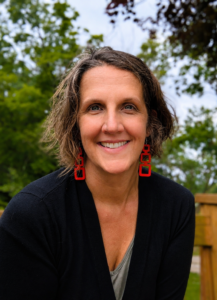
Sarah McCubbin is the founder of Indie Education Network and Indie Education Press and host of the Beyond the Schoolhouse podcast. A mom of nine with nearly two decades of experience navigating homeschool, co-ops, private, public, charter, and other education models, Sarah believes there is no single right way to educate a child.
She writes about homeschooling, independent education, curriculum, education entrepreneurship, and the growing number of ways families and educators are creating learning experiences that fit real kids and real communities.
Through Indie Education Network, Sarah connects families, educators, leaders, and education businesses with the ideas, resources, and people helping shape the future of independent education.
Connect with Sarah:
IndieEducationNetwork.com | Beyond the Schoolhouse Podcast | LinkedIn

Leave a Reply