

Many families know what it means to teach children through a Christian lens. But what if Christian education could be more than adding Bible verses to traditional lessons?
What if learning became an invitation for children to discover God, understand their identity, recognize their purpose, and see creation with fresh eyes?
That is the heart of Revelate Learning, the educational framework discussed by Sarah McCubbin and Lesley Russell on Beyond The Schoolhouse.
Moving Beyond Transactional Education
Traditional education can easily become transactional:
- The teacher has the knowledge.
- The student receives it.
- The student completes the assignment.
- A grade measures the result.
Lesley Russell described a different approach—one that is transformational rather than transactional. Instead of assuming that the teacher possesses all wisdom and the child must simply acquire it, Revelate Learning begins with the belief that every child is a masterpiece, intentionally created in the image of God.
Children are not merely students trying to keep up with a system. They are individuals with unique gifts, spiritual identity, and a calling.
As Lesley Russell explained, children come “hardwired” to see and know God. The role of the parent or teacher is not to manufacture curiosity or identity, but to guide and shepherd what God has already placed within the child.
(Links on this page may be affiliate links. If you purchase through a link, we may earn a commission.)
The Five Essential Elements of Revelate Learning
Revelate Learning is built around five essential elements that Lesley fully outlines in her book, Revelations from God in Education: Learning Through the Lens of the Creator. Each one begins with the letter “P.”
1. Perspective
Learning begins with perspective.
Revelate Learning invites families and educators to approach every subject through the lens of the Creator. The earth, people, places, and all areas of knowledge belong to God and can reveal something about Him.
This perspective changes the question from:
“How do I get my child to understand this?”
to:
“What can we discover about God through this?”
Whether a child is studying mathematics, history, science, literature, or creation, learning becomes an opportunity to search for meaning and revelation.
2. Personhood
The second element is personhood, or Imago Dei—the understanding that every person is created in the image of God.
Children need more than academic information. They need to know who they are.
As Sarah McCubbin reflected during the conversation, understanding that a child is intentionally created by God can be especially powerful for children who have experienced brokenness or trauma. A painful part of someone’s story does not erase the truth that they are God’s masterpiece.
Education can help children ask:
- Who am I?
- Why was I created?
- What has God placed within me?
- How might God work through my life?
These questions reach far beyond career preparation or academic achievement. They help children develop a foundation for identity and purpose.
3. Pillars
The third element is pillars—the character qualities that shape how children treat one another and engage with the world.
Lesley Russell identified several of these qualities, including:
- Love
- Grace
- Honor
- Obedience
- Excellence
- Kindness
- Courage
These are not reserved for occasional character lessons. They are woven into the learning experience.
A lesson is not only about mastering content. It is also an opportunity to practice courage, extend kindness, pursue excellence, and honor others.
4. Biblical Principles
Revelate Learning also incorporates biblical principles into family life, education, leadership, and decision-making.
Lesley Russell emphasized the importance of identifying the principles that guide a family, organization, or school. These principles can shape the decisions made each day and provide a foundation for how people respond to challenges.
One principle highlighted in the conversation was the idea of leaving things better than you found them.
That principle can be taught through history, relationships, leadership, work, and everyday family life. Children can learn to consider not only what they receive, but also what they contribute.
Before moving on from a responsibility, position, project, or relationship, they can ask:
“Have I left this in a better place than when I found it?”
5. Pedagogy
The final element is pedagogy—the way learning takes place.
For Lesley Russell, this means moving away from a model where the adult is the sole source of wisdom and the child is expected to absorb information as quickly as possible.
Instead, transformational learning recognizes that adults can learn from children, too.
Parents and teachers become fellow learners. They explore, ask questions, and discover alongside children. This creates space for the child’s insight, curiosity, and God-given perspective.
Learning as Discovery
One of the most compelling ideas in the conversation was the connection between discovery and adventure.
As Sarah McCubbin observed, children are often energized by what is hidden or unknown—a treasure map, a scavenger hunt, or a secret waiting to be uncovered.
Revelate Learning approaches knowledge in a similar way. God has created a world full of meaning, patterns, beauty, and mystery. Learning becomes an invitation to slow down, pay attention, and search.
Lesley Russell connected this idea to the biblical image of Moses and the burning bush. Moses had to stop and notice that the bush was not being consumed. It was when he slowed down and moved toward what he saw that God called to him.
That picture offers a powerful lesson for modern education: children need opportunities to notice.
They need time to wonder, investigate, ask questions, and recognize that the adult in the room may not have every answer.
A Framework That Can Complement Existing Curriculum
Families do not necessarily need to abandon the curriculum they are already using.
Lesley Russell explained that Revelate Learning is a pedagogy and ethos that can be layered onto existing Christian curriculum. Curriculum can serve as a spine, while the parent or teacher determines how to use it.
This gives families flexibility. They can:
- Continue using a curriculum they value.
- Add the Revelate Learning framework to existing lessons.
- Create thematic units.
- Build interdisciplinary studies.
- Develop lessons around biblical principles and the Creator’s perspective.
The goal is not simply to complete more material. The goal is to transform how the material is encountered.
A history lesson, for example, can explore more than dates and events. A mathematics lesson can become an opportunity to notice patterns, order, and design. Literature can open conversations about identity, choices, courage, and redemption.
Education That Reaches Parents and Teachers, Too
Revelate Learning is not only for children.
As Sarah McCubbin noted, learning this framework can revitalize the adults who teach it. Parents, teachers, and leaders are also lifelong learners. When they begin to see familiar subjects through a different lens, their own understanding can be renewed.
Lesley Russell shared how homeschooling gave her the opportunity to learn subjects again alongside her children—including mathematics. What once felt difficult became engaging when she approached it as a shared exploration.
This is one of the gifts of learning together: the parent does not have to pretend to know everything. Instead, the family can discover together.
Bringing Heaven Into Every Sphere of Life
The conversation also expanded beyond education.
Lesley Russell described Revelate Learning as a mindset that can influence business, the arts, entertainment, leadership, and other areas of life. Education is not isolated from the rest of the world. It prepares children to live out their calling wherever God sends them.
The question becomes:
“In my sphere of influence, how can I bring a new lens and perspective to what God has given me?”
That question can shape the way children approach adulthood. Rather than focusing only on a degree, job, or career choice, families can help children consider how God may work through their gifts, character, and calling.
Creating Communities of Learning
Revelate Learning is also being developed through community.
Lesley Russell described prayer, teacher training, homeschool communities, schools, and international hubs as important parts of the movement. The goal is not for families to navigate educational change alone.
Parents, teachers, school leaders, and homeschool communities can learn together and encourage one another as they explore new models of education.
For families who feel that something is missing in their current approach, community can be an important next step. Sometimes the challenge is not a lack of commitment or faith. Sometimes families simply need language, framework, and wise counsel to understand what they have been sensing.
Rethinking What It Means to Educate
At its core, Revelate Learning asks families to reconsider the word “education” itself.
Lesley Russell shared that the word “revelate” emerged as she reflected on what education could look like through God’s perspective. Her research connected the word to learning through the lens of the Creator and the revelation of God in learning.
This reframes the role of education.
Education is not merely filling a child with information. It is not simply preparing students to meet external standards. It is not about forcing every child into the same pattern.
It is about helping children see.
To see God in creation.
To see their identity as His workmanship.
To see learning as meaningful.
To see their gifts as purposeful.
To see the world as a place where they can serve, create, lead, and leave things better than they found them.
A New Question for Families
For parents, teachers, and education leaders, the invitation is simple but significant:
What would change if every lesson became an opportunity to discover God, understand identity, and cultivate purpose?
Families can begin by asking:
- What perspective does this lesson invite?
- What does this reveal about God’s creation?
- How does this help my child understand who they are?
- What character qualities can we practice?
- What biblical principles apply?
- What questions might my child be able to explore that I have not considered?
- How can we leave this lesson, relationship, or responsibility better than we found it?
Education is changing rapidly, and families have more choices than ever. Frameworks such as Revelate Learning offer one way to think intentionally about those choices—not only in terms of curriculum, but also in terms of identity, purpose, community, and transformation.
To learn more about the training and framework, visit revelatelearning.com. Families interested in the online high school program, co-op opportunities, and campus information can visit equip210.com.
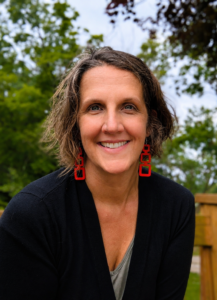
Sarah McCubbin is the founder of Indie Education Network and Indie Education Press and host of the Beyond the Schoolhouse podcast. A mom of nine with nearly two decades of experience navigating homeschool, co-ops, private, public, charter, and other education models, Sarah believes there is no single right way to educate a child.
She writes about homeschooling, independent education, curriculum, education entrepreneurship, and the growing number of ways families and educators are creating learning experiences that fit real kids and real communities.
Through Indie Education Network, Sarah connects families, educators, leaders, and education businesses with the ideas, resources, and people helping shape the future of independent education.
Connect with Sarah:
IndieEducationNetwork.com | Beyond the Schoolhouse Podcast | LinkedIn

Leave a Reply